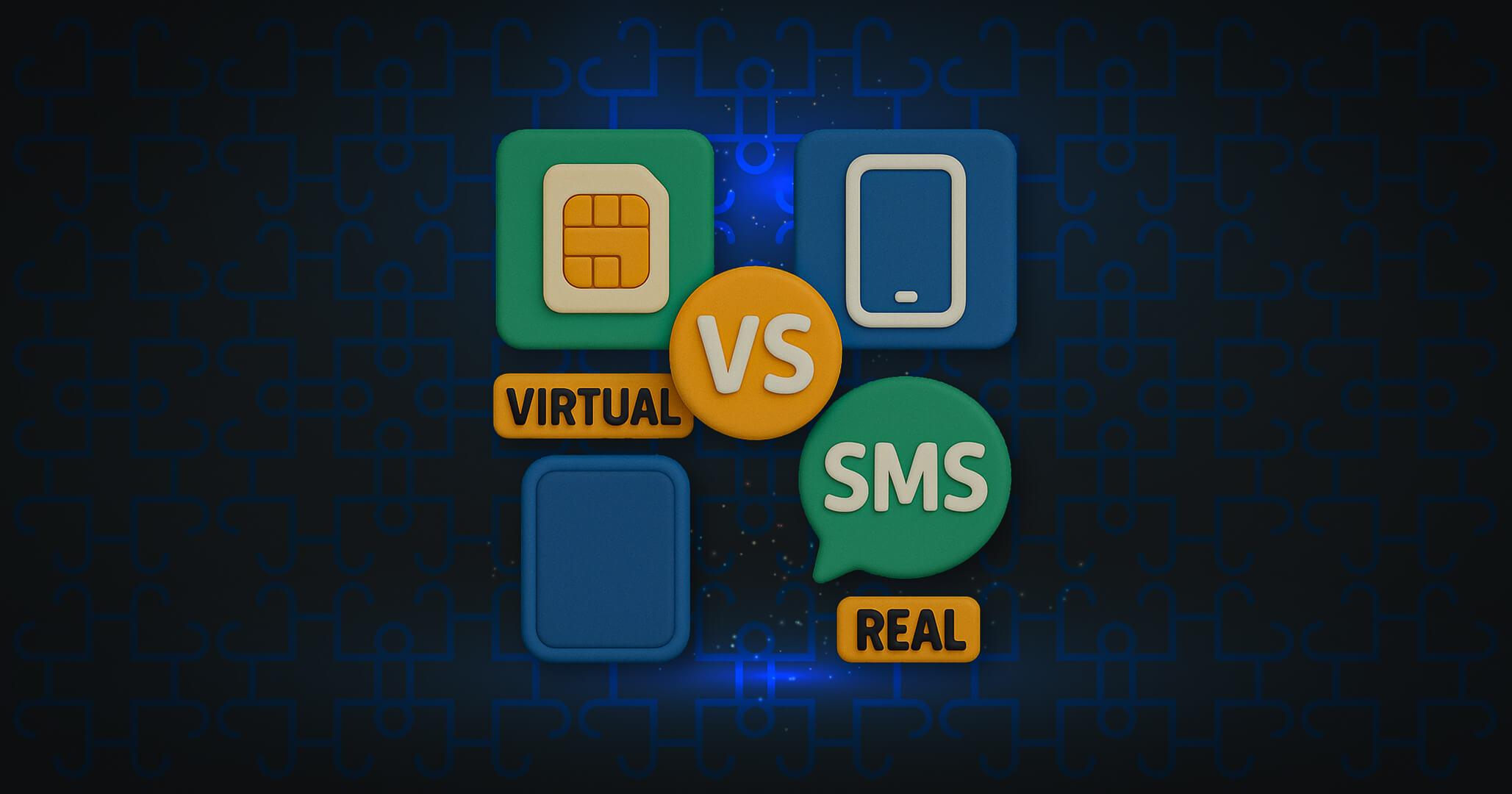
In today’s digital world, text-message confirmation has become a key step in securing accounts and accessing services. Whether you're registering for a social media platform, activating two-factor authentication (2FA), or using temporary accounts, the decision between using a virtual phone number or a real (physical) phone number can have major implications. In this guide by VSim, we’ll explore the pros and cons of each to help you decide what’s best for your verification needs.
Text-message confirmation is used across platforms for identity confirmation and protection against fraud. Choosing the right type of number is crucial, especially in contexts where privacy, accessibility, and flexibility matter.
Real phone numbers are issued by local mobile network operators and are tied to a SIM card. These are typically used for personal and business communication and are linked directly to a physical device.
Pros:
Cons:
Virtual phone numbers are cloud-based numbers provided by services like VSim. These numbers are not tied to a SIM card and can be accessed online for SMS reception.
Pros:
Using a virtual number, especially through VSim, gives users:
While powerful, virtual numbers may face restrictions:
Use a real number when:
VSim supports a wide range of text-message confirmation scenarios:
| Criteria | Real Number | Virtual Number (VSim) |
|---|---|---|
| Long-term use | ✅ | ❌ |
| Privacy needs | ❌ | ✅ |
| Global availability | ❌ | ✅ |
| One-time verifications | ❌ | ✅ |
| Risk of spam | High | Low |
Choose VSim if your priorities are speed, privacy, and flexibility in handling verifications.
Real numbers are reliable for personal and long-term use, but virtual numbers, especially with services like VSim, are unmatched in temporary, private, and scalable text-message confirmations. Evaluate your needs, and leverage VSim for a seamless experience in managing your digital identity.